If you're anything like me, you've probably done some version of this before.
You spend ages writing a Facebook post.
Or sending a newsletter.
Or announcing a Kindle sale.
Then you paste an Amazon link underneath it and hope for the best.
And then... nothing.
Did people click?
Did they buy the book?
Did anyone from outside your own country even get to the right store or buying option?
You have no idea.
Why Raw Store Links Aren't Enough
Amazon, Kobo, Apple Books, Google Play, Barnes & Noble, Bookshop.org, and direct-sale links are great for selling books.
They're terrible for marketing books.
They don't tell you:
- How many people clicked.
- Which countries your readers came from.
- Which marketing campaign performed best.
- Whether readers landed on a retailer choice page.
- Whether somebody actually clicked through to a retailer listing.
Even worse, many authors accidentally share an Amazon UK link that doesn't work properly for a reader in another country.
That's friction you don't need.
Readers disappear surprisingly quickly when they encounter obstacles.
What Should You Actually Be Tracking?
At a minimum, every marketing link you share should answer these questions.
1. How Many People Clicked?
This is the simplest metric.
If you post a link in:
- Your newsletter
- Your website
You should know exactly how many visitors came from each source.
Otherwise you're effectively throwing darts blindfolded.
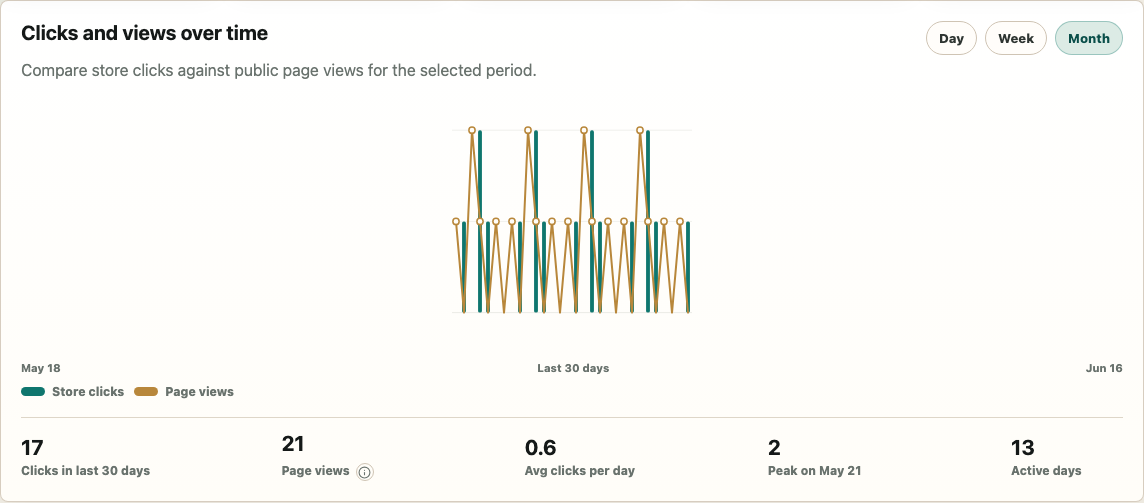
The useful bit is not just the total number. You want to see whether attention arrived in a spike, drifted in slowly, or kept coming after the first announcement. A campaign that produces 20 clicks in one hour tells a different story from a campaign that produces 20 clicks across two weeks.
2. Which Countries Are Your Readers Coming From?
This one surprised me.
Many authors assume most of their audience comes from their own country.
That isn't always true.
You may have readers from:
- United States
- United Kingdom
- Canada
- Australia
- Germany
Knowing this helps you make better decisions about future promotions.
There's very little point heavily promoting a Kindle sale that's only available in one store if half your audience lives somewhere else.

This is also where retailer tracking matters. If readers from the United States are mostly ending up on amazon.com or Barnes & Noble, and readers from the United Kingdom are mostly using Amazon UK or a global ebook retailer, you can tell your buying paths are doing useful work instead of silently sending people to the wrong place.
3. Which Campaigns Are Actually Working?
Don't share the same link everywhere.
Create separate links for different campaigns.
For example:
Facebook Launch Post
/c/facebook-launch
Newsletter
/c/june-newsletter
Podcast Appearance
/c/author-interview
Now you can see exactly which activities produce results.
Sometimes the answer is surprising.
Sometimes the thing you spent 30 seconds doing outperforms the thing you spent three hours obsessing over.
4. Where Are Readers Dropping Off?
A click isn't always the end of the story.
A useful system should tell you:
- Someone viewed a landing page.
- Someone saw a retailer choice page.
- Someone clicked through to a store.
- Someone encountered a broken or unavailable path.
That extra context is incredibly valuable because it tells you where friction exists.
My Own Solution
I originally built Tutarium because I was running into these exact problems myself.
Instead of sharing raw store links, I wanted:
- One durable link for my book.
- Automatic Amazon marketplace routing when it was safe.
- Wide retailer options on the book page.
- Separate campaign links.
- Click analytics.
- Country breakdowns.
- Retailer click tracking.
That's ultimately what Tutarium became: a way for authors to see which book marketing sends readers to stores. It combines public book pages, campaign links, recommended retailer choices, country-aware Amazon routing, affiliate tags, and store-click analytics without pretending those clicks are completed sales.
The biggest lesson I've learned is that marketing becomes much easier once you stop guessing.
You don't need millions of readers.
You just need feedback.
Because once you know that:
- Facebook produced 17 clicks.
- Reddit produced 42 clicks.
- Your newsletter produced 83 clicks.
- 60% of readers came from outside your own country.
You suddenly know what to do next.